


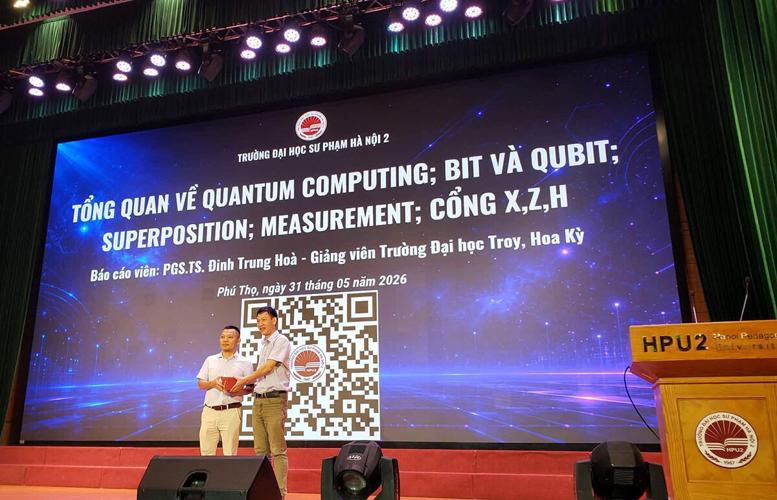
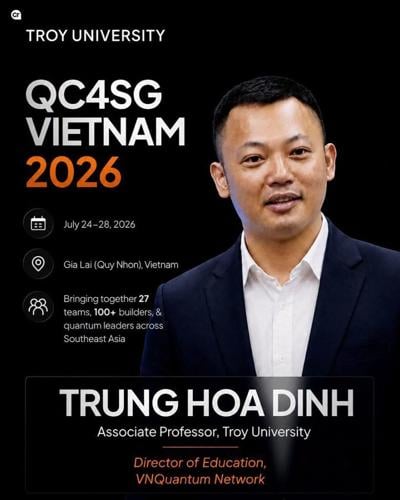
A Troy University professor played a central role in one of Southeast Asia’s most significant quantum technology events this summer, helping to coordinate a major public science program and international quantum computing hackathon in Vietnam.
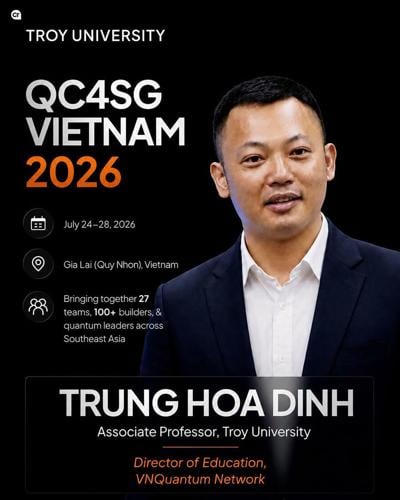
Dr. Dinh Trung Hoa, a professor in the Department of Mathematics and Statistics, coordinated the VNQuantum Roadshow, a public conference on quantum and semiconductor technology that opened on July 27 as part of Gia Lai Quantum Year 2026, the first year-long quantum science and technology program organized by a Vietnamese province.
In addition to leading the roadshow, Dinh served as a mentor and judge for the International Quantum Computing Hackathon for Social Development Goals (QC4SG 2026), the technology centerpiece of the program.
People are also reading…
“Quantum technology will shape the future of computing, communication and scientific discovery, so it is essential that students and the broader public have opportunities to engage with these ideas today,” he said. “Vietnam is rapidly establishing itself as an active member of the global quantum community, and it has been exciting to help connect that momentum with Troy University’s commitment to international collaboration, education and research.”
Held at the International Centre of Interdisciplinary Science and Education (ICISE) and the Provincial Convention Center in Quy Nhon, Gia Lai, QC4SG 2026 is the first quantum computing hackathon ever held in Vietnam and only the second in Southeast Asia. The competition drew more than 300 applications from 30 countries and territories.
“One of the most rewarding parts of this experience was seeing students from around the world apply quantum computing to real challenges that affect people’s lives,” Dinh said. “Events like this inspire the next generation of scientists while showing that quantum technology is becoming an international effort, not one limited to a handful of countries.”
After several rounds of screening and online training, 26 finalist teams of nearly 100 participants advanced to the on-site final from July 24 to 28, working alongside roughly 50 mentors and judges from Vietnam and around the world. Teams developed solutions that combined quantum computing with artificial intelligence and machine learning to tackle real-world challenges in fields like agriculture, energy, the environment, healthcare and cybersecurity.
As coordinator of the VNQuantum Roadshow, Dinh helped bring quantum and semiconductor science to a broad public audience, including students, educators and members of the local community—part of a deliberate effort to make a frontier technology accessible beyond the research laboratory.
“Dr. Dinh’s leadership role reflects Troy University’s commitment to international academic engagement and to preparing students and scholars for emerging fields such as quantum information science,” said Dr. Govind Menon, dean of the College of Science and Engineering. “His work also strengthens academic and scientific ties between Troy University and Vietnam’s fast-growing science and innovation community.”
QC4SG 2026 and the broader Gia Lai Quantum Year are organized by the Gia Lai Provincial People’s Committee, the Gia Lai Department of Science and Technology, the National Innovation Center (NIC), and the Vietnam Quantum Network (VNQuantum), in coordination with ICISE and international partners including the Open Quantum Institute (OQI/CERN).
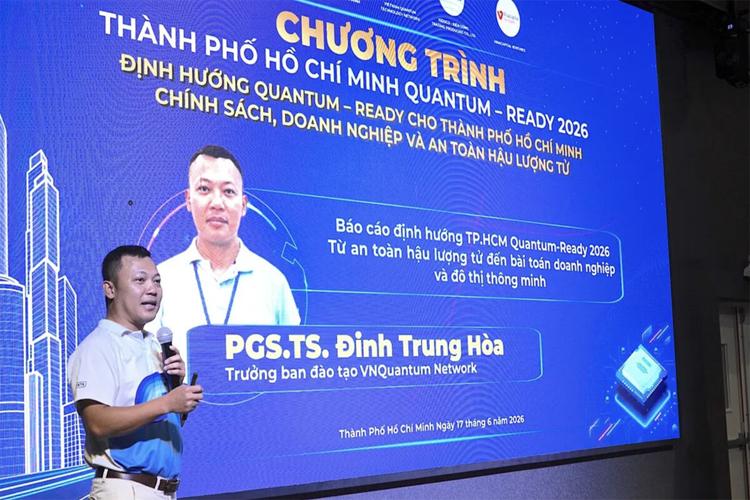
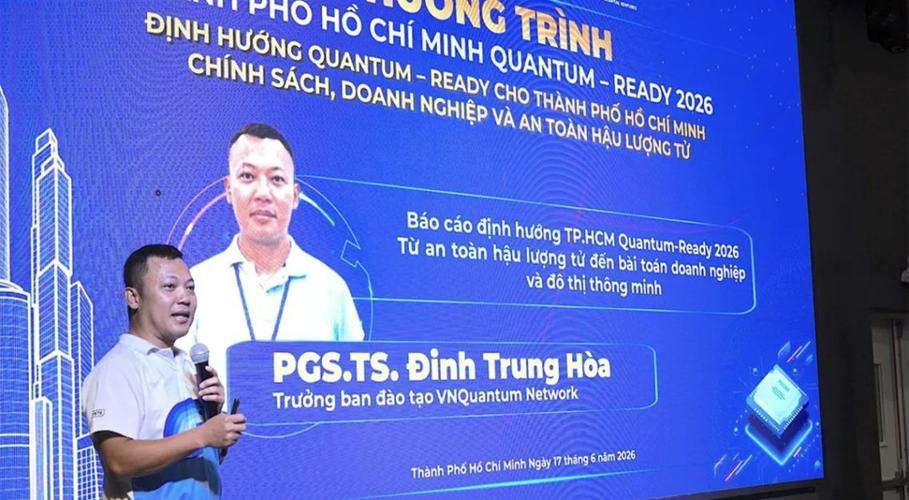
In June, Dinh also traveled to Ho Chi Minh City in Vietnam to serve as the main organizer and a presenter at the Ho Chi Minh City Quantum – Ready Day 2026 conference. The workshop was attended by approximately 200 experts, scientists, representatives of the science and technology business community and investors in the city.
His presentation, titled “Ho Chi Minh City Quantum-Ready 2026: From Post-Quantum Security to Business and Smart City Challenges,” gave an overview of global trends in quantum technology development, new challenges for data and digital infrastructure and suggested necessary preparatory steps for Ho Chi Minh City to gradually build its quantum-ready capabilities.


