


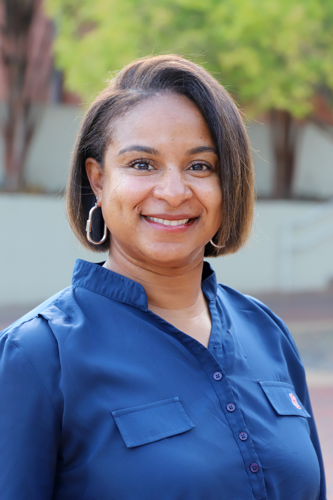
Dr. Evelyn Hunter
Research is supposed to change lives.
Too often, the people it’s meant to help only enter the conversation after the questions have already been written.
Dr. Evelyn Hunter wanted to change that.
Instead of asking people living with multiple sclerosis (MS) to simply participate in a study, the professor in the Department of Special Education, Rehabilitation and Counseling asked them to help shape it.
“The patients are the experts,” Hunter said. “They’re the ones living with this every day. If we want to build something that’s actually helpful, we have to start listening.”
Hunter’s research received a major boost in 2024 with an $850,000 grant from the Bristol Myers Squibb Foundation, allowing her team of professional collaborators and doctoral students to create DisruptMS, a community-based research project focused on improving the lives of people with MS.
People are also reading…
Multiple sclerosis is a chronic disease in which the body's immune system attacks the protective covering around nerves, disrupting communication between the brain and the rest of the body. Symptoms vary from person to person but can include fatigue, numbness, pain, vision problems and difficulty with movement. There is no cure, only symptom management.
Hunter's research focuses on something many people don't immediately connect to the disease: psychological stress.
While stress doesn't cause MS, research has shown it can trigger or worsen flare-ups, making symptoms more frequent or more severe. For many people living with MS, managing stress is just as important as managing the disease itself.
“There’s often a grieving process,” Hunter said. "People aren't just adjusting to a diagnosis. They're adjusting to a different version of the life they thought they'd have."
The work became personal long before it became professional.
As a newly trained psychologist, Hunter watched someone she loved navigate depression and uncertainty as a result of their MS diagnosis, a disease neither of them fully understood.
Today, more than 280 MS participants across Alabama and Georgia have contributed to the project through interviews, biological samples and community engagement. But Hunter said some of those important discoveries didn’t come from bloodwork or spreadsheets. They came from conversations.
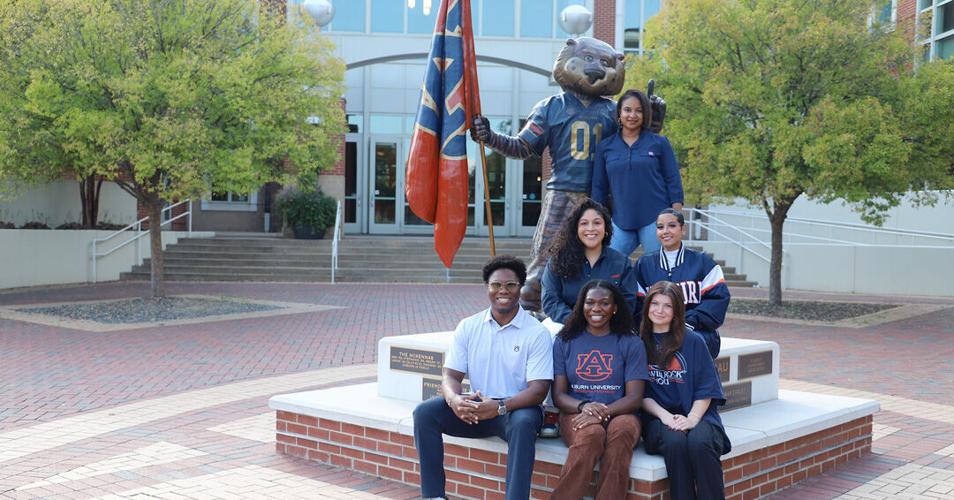
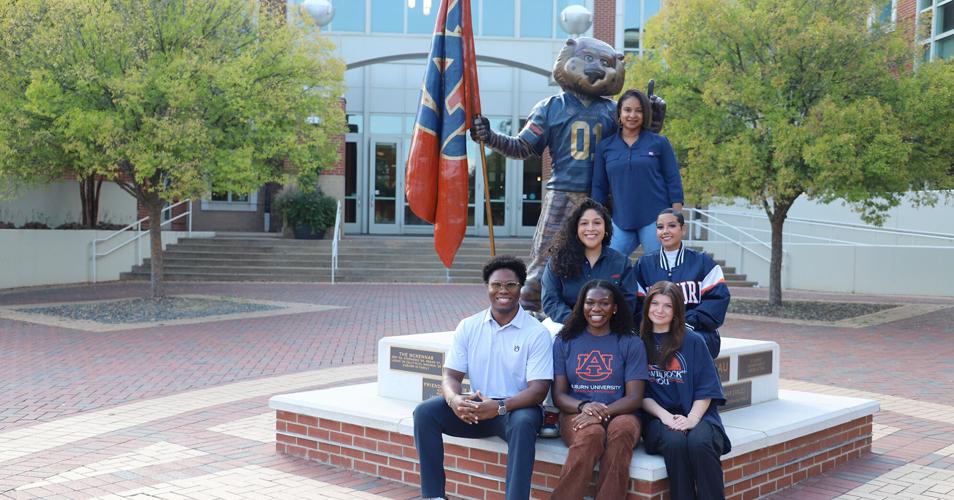
Hunter and members of the DisruptMS team, including doctoral students Gisela Rosa and Joy Hassan, are working alongside people living with multiple sclerosis to better understand their experiences and develop research that responds to their needs.
Listening first
During interviews, participants described how stress, grief and discrimination affected both their mental and physical health. Again and again, Hunter heard stories that traditional research often overlooks.
One story changed the project entirely.
“I say I’m tired, and they (my family) think I just need a nap,” one participant told the research team. “What I’m saying is my body physically can’t move.”
The conversation revealed an unexpected gap. Loved ones often wanted to help but didn't fully understand what living with multiple sclerosis feels like day to day, sometimes unintentionally adding to a person's stress instead of easing it.
“Stress doesn’t just affect how someone feels emotionally,” Hunter said. “It affects the entire body. If we can help people better manage that stress, we have an opportunity to improve quality of life.”
Doctoral student Joy Hassan said the experience transformed how she thinks about research. Coming into the project, Hassan knew relatively little about multiple sclerosis.
“The people living with it became my teachers,” she said.
Building something together
For Hassan and fellow doctoral student Gisela Rosa, that lesson continued beyond the interviews.
The team traveled to neurology clinics and MS conferences, setting up pop-up research clinics so people could participate where they already were instead of making another trip.
Rather than struggling to recruit volunteers, they found people eager to share their experiences.
“They were so excited that someone wanted to understand what they were going through,” Rosa said. “They wanted to be heard.”
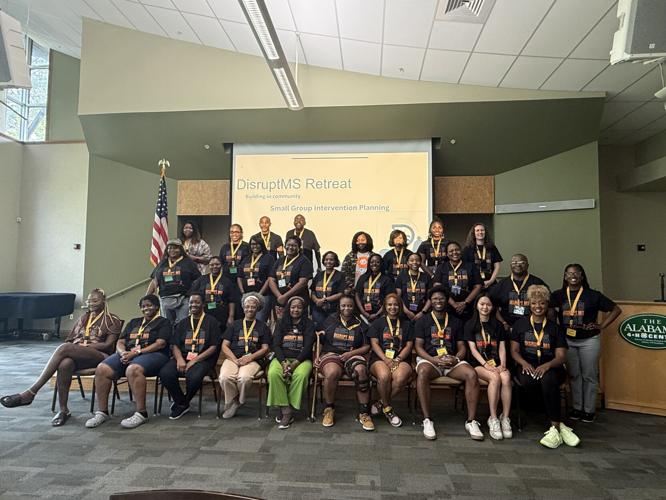
Those conversations continued during a retreat where participants, researchers and graduate students shared meals, activities and camaraderie.
The research team planned ways to encourage community.
“We thought we’d have to help people connect," Hassan said. “Instead, it happened naturally.”
Participants laughed together, swapped advice and encouraged one another.
One phrase echoed throughout the retreat.
“I have MS — MS doesn’t have me.”
Researchers and participants gathered for a DisruptMS retreat focused on community building and planning the project’s intervention. The retreat gave people living with MS a direct role in shaping the next phase of the research.
Research with, not for
For patient advocate Nana Opongowusu, that approach made all the difference.
Diagnosed with MS in 2022 after weeks of unanswered questions and multiple emergency room visits, Opongowusu understands how isolating a diagnosis can feel.
Working in clinical research herself, she also understands how studies are usually built.
“Normally, researchers put the study together first and then ask people to participate,” Opongowusu said. “This project asked us what we thought before they built it.”
She believes that made the research stronger.
“When you involve patients from the beginning, you’re creating something people will actually use,” Opongowusu said.
Hunter said the work is far from over.
“This isn’t the end,” Hunter said. “Everything we’ve learned from our participants is helping us build an intervention we hope will make a real difference for people living with multiple sclerosis.”
The research team is now using what participants shared to develop and test that intervention, with the goal of giving people living with multiple sclerosis practical tools to better manage stress and, in turn, reduce the impact of symptom flare-ups.
But perhaps the project’s biggest lesson is much simpler.


