


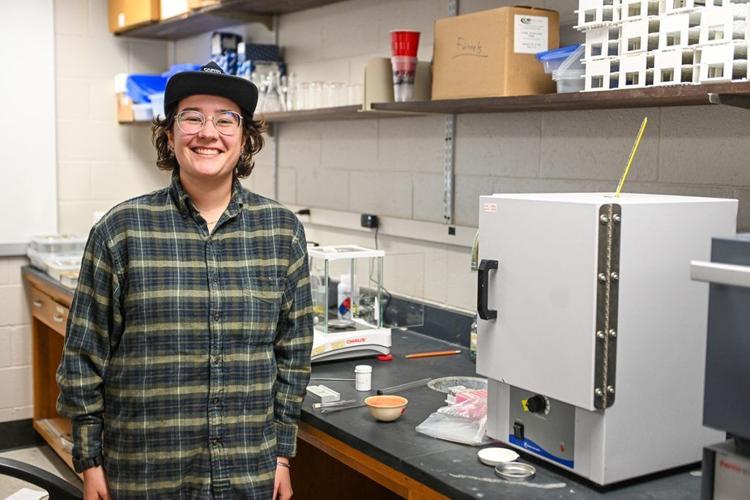
A Troy University graduate student has been awarded the 2026 Alabama Audubon’s Walter F. Coxe Research Grant for her research into native freshwater mussels in the Pea River.
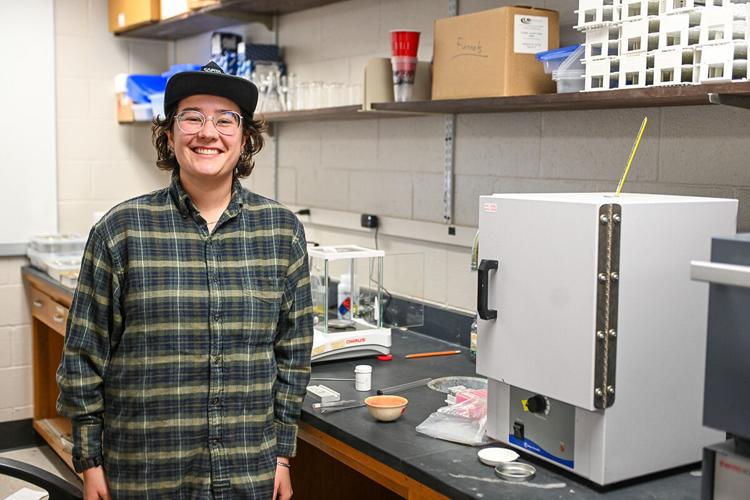
Sydney Bernard, a graduate student in the Department of Biological and Environmental Sciences from Richmond, Virginia, was awarded the $1,500 grant for her master’s thesis titled “Feeding Ecology of Native Freshwater Mussels and Corbicula fluminea in the Pea River using Stable Isotopes.”
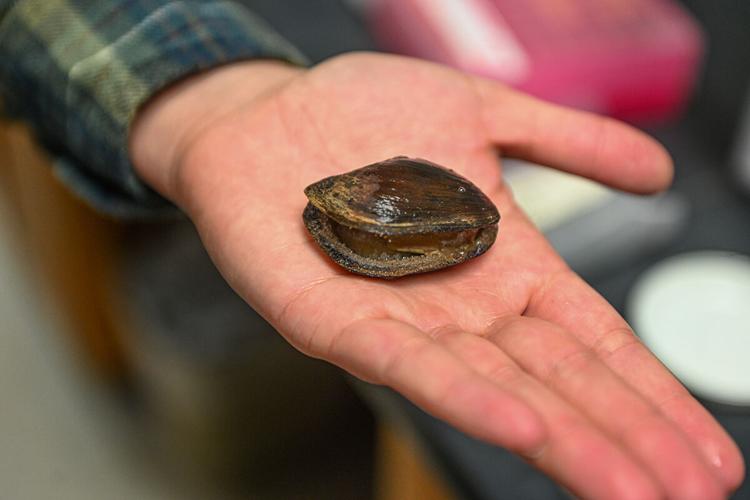
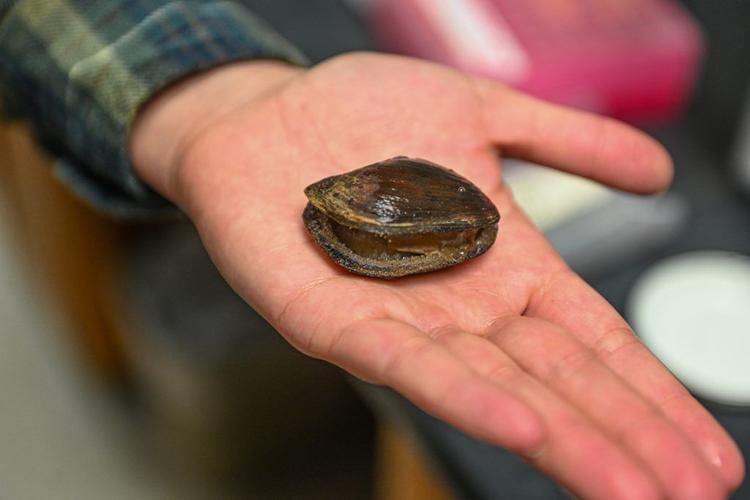
Freshwater mussels are the most endangered aquatic organism in the world, Bernard said, with around 10 percent of mussels listed as extinct and another 70 percent listed as endangered, threatened or otherwise imperiled.
People are also reading…
“Alabama is the most biodiverse place for freshwater mussels in the country, so we actually live in the best state to study this kind of thing,” she said. “They are ecosystem engineers—they do a lot of different things for the ecosystem, but the most important being that they filter water. They take in particles from the water with their siphoning mechanism, then they filter that and spit out cleaner water. Their shells also can provide habitats for different animals, absorb carbon, and stabilize the river bottom.”
Bernard is studying native freshwater mussels against the invasive Corbicula fluminea, or Asian clam, to see if they are outcompeting the native mussels for food.
“The reason that I’m looking at these three species versus the invasive species is because they’re both types of bivalves,” she explained. “The clam can filter feed, but it can also pedal feed. That gives it more functional abilities than the native mussels. So, the clam could be outcompeting natives for food, or just a better generalist species.”
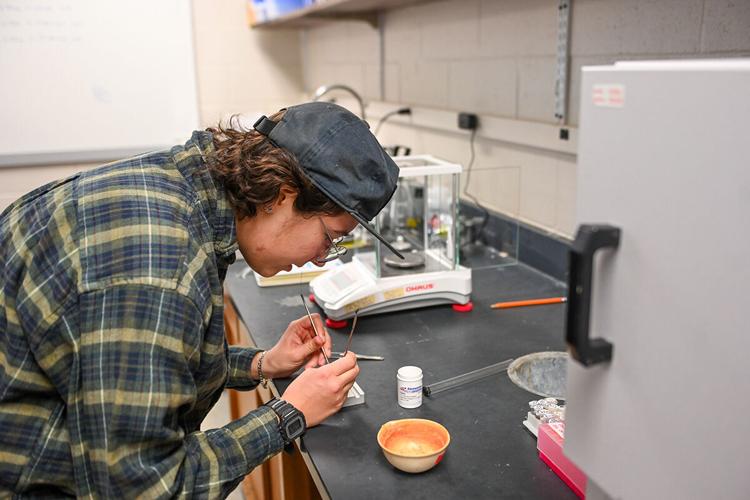
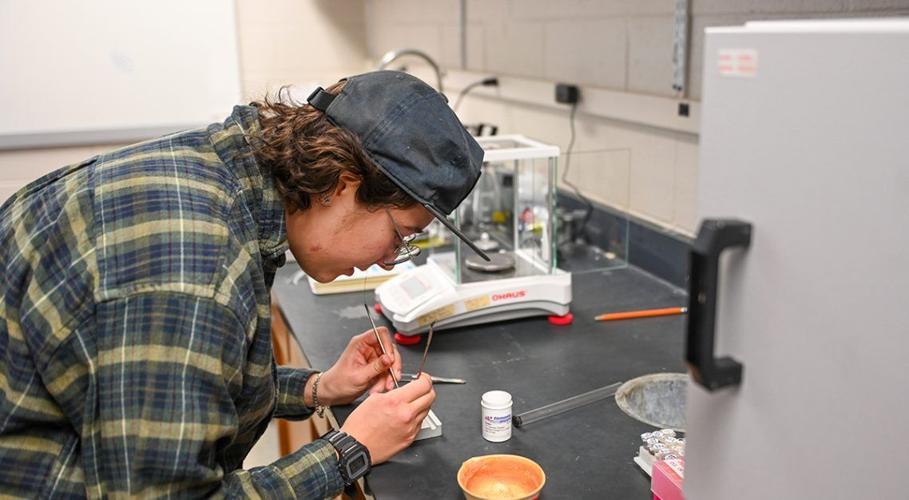
To perform her research, Bernard gathers mussels from the river, takes a tissue sample and collects river water and possible food sources. Back in the lab, she filters the water, sections it into small bowls called crucibles and heats it so the water evaporates, leaving only small organic matter particulates behind. Once the matter is collected into pellets, they are shipped to Washington State University for stable isotope analysis.
“When mussels filter feed, they help cycle nutrients by ingesting and assimilating carbon and nitrogen from their particulate food sources,” she explained. “Stable isotope analysis traces carbon and nitrogen signatures in bivalves and their food sources, making it a helpful tool for evaluating their diets.
“Once I get the data back, I’ll be able to see what food sources overlap. I’ll be able to see if the native mussels are eating the same thing as the invasive species and what the invasive is eating more of, seeing if that overlap can give me more information on eating habits and if they are outcompeting the native mussels for food after all.”
Prior to enrolling at TROY, Bernard graduated with a bachelor’s degree in sustainability from the University of Tennessee in Knoxville and started in the field as an environmental educator. Prior to graduating, she interned for a freshwater mussels graduate student and discovered her love of field research.
After spending a year as an elementary school teacher, she began looking into graduate schools and found a listing for a graduate research assistant at TROY that would also run an environmental education program.
“I wanted to get my master’s degree because I wanted more of that scientific background. I did get that in sustainability, but I also got a lot more of the human impact on the environment and kind of how the social sciences intersect with core science,” Bernard said. “With the position at TROY, I was able to leverage my environmental education experience and still take part in scientific research. It honestly just was the perfect opportunity.
“What I love about what I do at TROY is that I get be in the field and in the lab and doing that core science work but also doing outreach events and going to local schools, working with kids, working with teachers and grant writing.”
While under the guidance of Dr. Brian Helms, associate professor and EBS graduate coordinator, Bernard said she’s also been able to work closely with Jonathan Miller, aquatics lecturer.
“Everybody’s been super welcoming ever since I got to TROY last June,” she said. “Dr. Helms is great to work with and has bought into all my ideas, but he’s also helped me learn a bunch of new skills. I had no idea what a stable isotope analysis was before I came here. Jonathan Miller has also taught me a lot, especially about identifying mussels and those core skills in the field. I feel like I’ve picked up a lot from him.”
About the Alabama Audubon’s Walter F. Coxe Research Grant
Alabama Audubon’s Walter F. Coxe Research Grants support scientific research directly applicable to the exploration and conservation of Alabama’s plant and animal life. While priority is given to field-based projects performed at Alabama localities and/or by researchers at Alabama-affiliated institutions, other applicants working on research applicable to conservation issues in our state are also encouraged to apply.
Active since 1927, and formally established in 1946, Alabama Audubon’s mission has always been to promote conservation and a greater knowledge of birds, their habitats and the natural world.
Sydney Bernard continues her research at TROY while contributing to both scientific understanding of freshwater mussels and environmental education efforts in local schools.


