


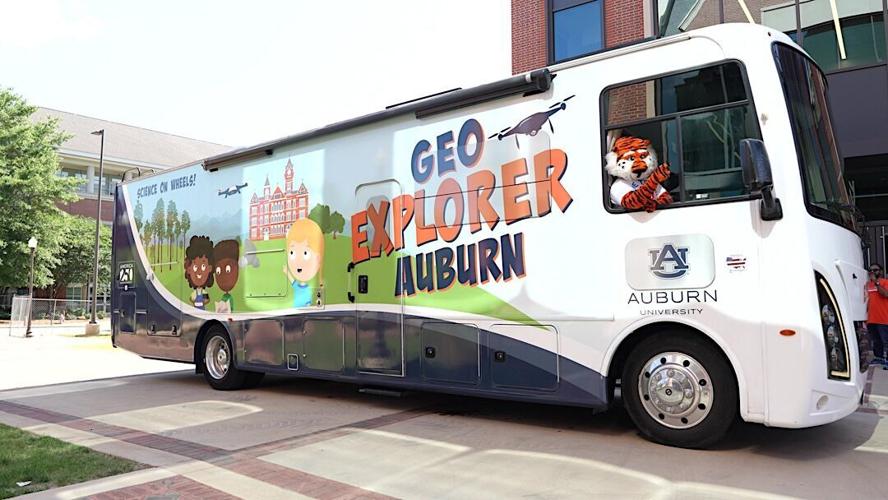
Timothy Hawthorne doesn't think that the 36-foot solar-powered mobile science lab with the walk-in tornado simulator and augmented reality topographical sandbox and VR headsets and microscopes should seem out of place at the big to-do in Washington, D.C., this Saturday.
Sure, Fourth of July parades in the nation's capital are typically reserved for things like marching bands and majorettes and military units and equestrian performances and other typical patriotic tributes to the nation's proud past. But Geo Explorer Auburn, he says, is the perfect variation on the theme — a tribute to the nation's future.
"I mean, this is America, right?" said Hawthorne, professor and chair of the Department of Geosciences in the College of Sciences and Mathematics (COSAM). "One of the things I think is really special about what we're doing and why we were invited to be in the America250 parade and celebration, is the idea that science and technology are core values of what we believe in as a nation. They've been that way over the last 250 years and they'll be that way for the next 250 — and that starts with education. It starts with the excitement of the next generation carrying that torch, and that's what this mobile lab is all about — supporting that particular American dream."
People are also reading…
Launched in the fall of 2024 within Auburn’s Department of Geosciences and College of Sciences and Mathematics (COSAM), the one-of-a-kind rolling classroom — a 2023 Thor Windsport RV in its brief former life — was developed and built by Auburn faculty, students and staff as an effort to give one of the university's foundational responsibilities a 21st century tune-up.
“As a land-grant institution, we are fundamentally tasked with taking the incredible knowledge, research and innovation generated on our campus and extending it directly to the people of Alabama and beyond," Hawthorne said. "This is that mission in motion.”
In 2025, that motion made it all the way to the Pacific Ocean.
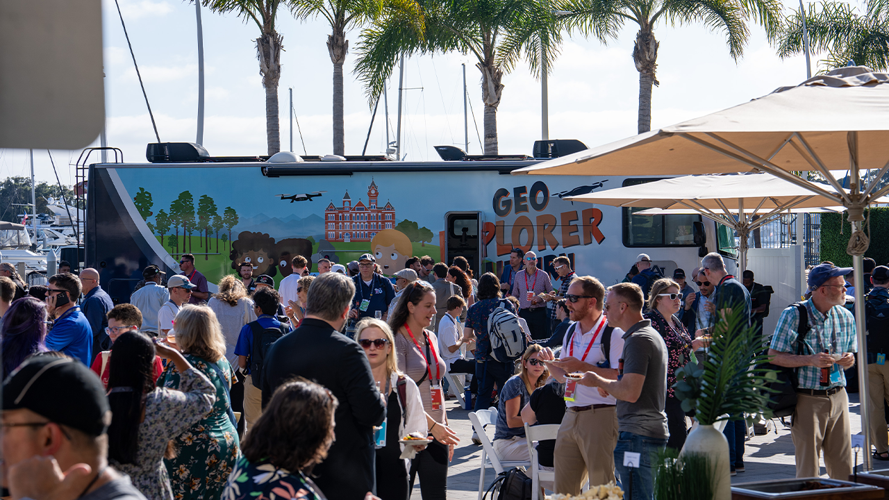
The lab's inaugural "Quest Out West" expedition logged more than 4,000 miles — and more than 5,000 smiles — en route to the Esri Education Summit in San Diego and back, inspiring spell-bound students at educational pop-up events along the way.
Dustin Braden, director of operations, still talks about the girl with the rocks.
"It was at the end of this really exhausting leg of the trip and I remember just feeling really like, 'Oh man, now we have to do a school visit? Are you serious?' But we pull up and you hear the cheering of these kids, and we all just made eye contact with each other in the RV like, 'Oh wow.' It just breathed life into all of us."
Braden, a research associate in the Department of Geosciences, was working the digital microscope station.


