


For Auburn researchers, there’s no snoozing on the science and study of sleep — a vital part of life where the average person will spend roughly one-third of their lifetime.
In recent years, research surrounding sleep has grown on the Plains thanks to the collaborative interdisciplinary efforts from various units at Auburn University.
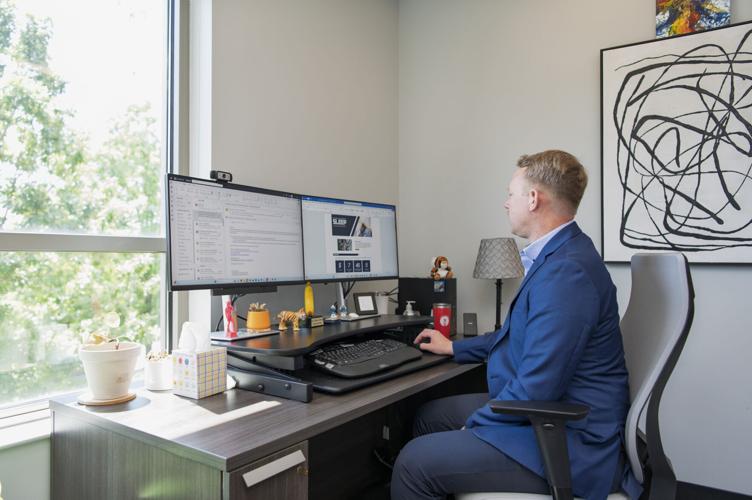
One of those helping to lead the way is Brian Gillis, assistant professor of Marriage and Family Therapy.
“Our mission is to advance sleep science in the state of Alabama by connecting people, facilitating partnerships and sharing knowledge,” said Gillis. “We support the work of researchers, clinicians and trainees by hosting talks of interest to the sleep community, supporting the development of research projects and providing opportunities for networking.”
People are also reading…
The aforementioned talks of interest is a series of discussions called “Auburn Sleep Talks,” and it’s just one of the ways Gillis has expanded the outreach and impact of sleep research by bringing together a wide-ranging group of colleagues from Auburn and other institutions.
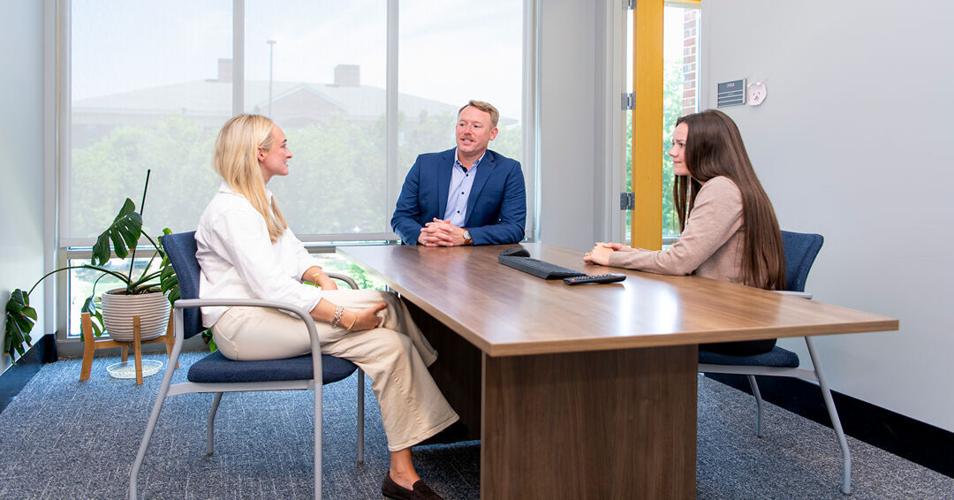
“Bringing together people from campus and beyond is exactly the kind of thing that we were looking for — collaboration across schools and units and in this case, across institutions by partnering with colleagues from UAB and East Alabama Health,” said Gillis. “We now have members from the Colleges of Education, Human Sciences, Liberal Arts, Nursing and Veterinary Medicine.”
Gillis is helping lead the way to advance sleep research thanks to the collaborative interdisciplinary efforts from various units at Auburn University.
Because sleep affects everyone, the impact Auburn can have through sleep research is far reaching.
“A number of us are regularly in the community talking with people about how to improve sleep,” said Gillis. “Adding on the clinical services for sleep problems and sleep disorders from East Alabama Health helps to complete the spectrum. There’s not a lot of treatment of sleep disorders on campus but adding our partners at East Alabama Health means that as a group, we are treating the whole continuum from learning about sleep, sharing that information in the community, and treating problems.”
Some of the biggest advantages of meeting collaboratively as a group is the ability to bounce ideas off each other and avoid duplicated learning or research, according to Gillis.
"I think the biggest advantage is the exchange of ideas. While developing grant proposals, we can ask one another, ‘I’m thinking about adding this, what direction do you think I should take?’,” said Gillis. “Some of us have worked on technologies of collecting sleep data that others haven't, so we are sharing that information. I think that interdisciplinary piece is really appealing when we have multiple colleges working together.”
Additionally, research can become so specialized and specific that sometimes Auburn researchers may feel isolated in their work — potentially only meeting others who research their topic or discipline when they travel to a conference.
“At Auburn, we don’t have to go to a sleep conference to learn more about the topic we love. There are all these people right here on campus who nerd out about sleep.”
Auburn’s recently formed sleep research collaboration alleviates those feelings of isolation.
“At Auburn, we don’t have to go to a sleep conference to learn more about the topic we love,” said Gillis. “There are all these people right here on campus who nerd out about sleep.”
An exciting recent development occurred when two graduate students from the College of Education attended a recent Auburn Sleep meeting and jumped in with their own ideas, pointing out that there are so many college students on campus who are not sleeping well or could improve their sleep and that better sleep promotion could be implemented.
“That’s a really cool student-led part, where they have an interest in reaching out to other student groups and organizations to emphasize the importance of sleep. Essentially, it’s students helping other students,” said Gillis.
As for the Auburn Sleep Talks, they are not limited to just Auburn faculty members and researchers. In the future, Gillis hopes more outside experts will join the Auburn Sleep Talks.
Related content
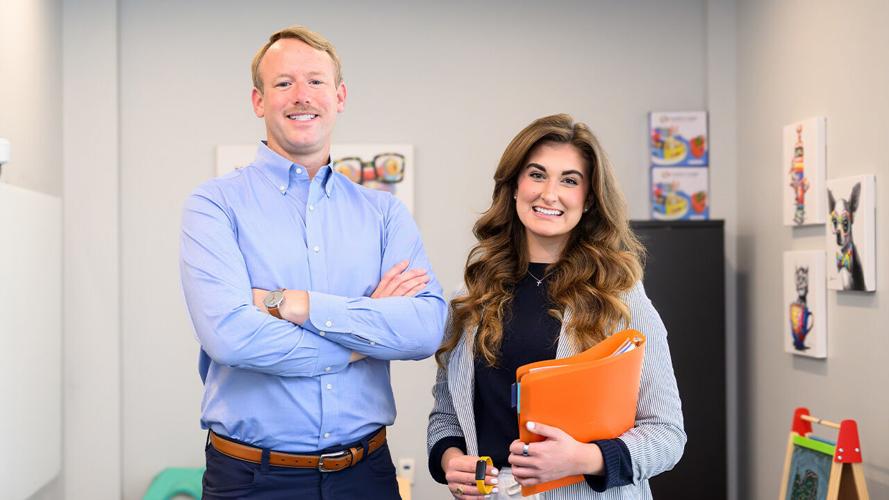
Elle Neuhoff always wanted to combine sleep science and therapy, but it wasn’t until she met Assistant Professor Brian Gillis that she realized she could.
“This is open to everybody. In addition to faculty and graduate-level trainees, I would love to have undergraduates and staff members attend who are interested in learning more about sleep,” said Gillis. “To further broaden our scope, we are hoping to host one bigger talk per year where we have a national expert on sleep come to campus.”
As sleep research continues to evolve on Auburn’s campus, Gillis is excited about future grant proposals, the continued growth of Auburn Sleep Talks and the participation and assistance of other institutions.
“I'm gratified that we've had so much interest on campus from members of the administration who express enthusiasm about interdisciplinary work across colleges on campus,” said Gillis. “I’m hopeful that more people will join.”
To join the Auburn Sleep group’s mailing list, email sleep@auburn.edu. Learn more about Auburn Sleep at the link below.
For more information on the College of Human Sciences, visit the link below.


