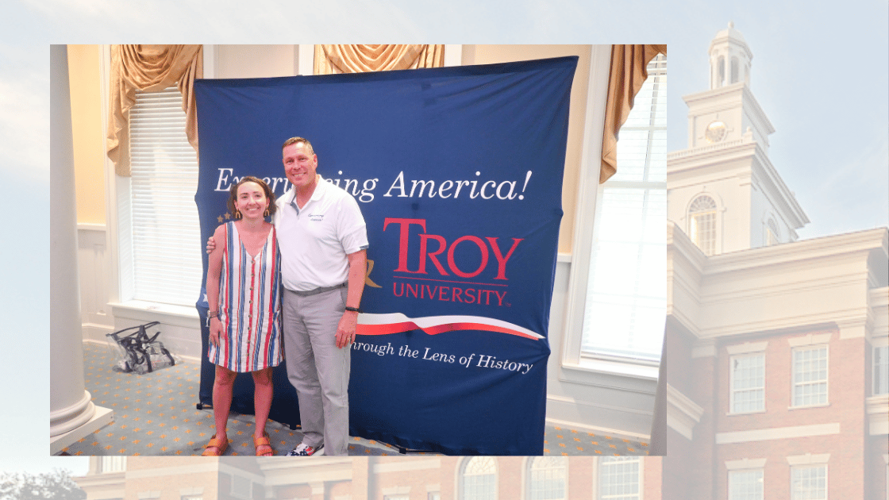
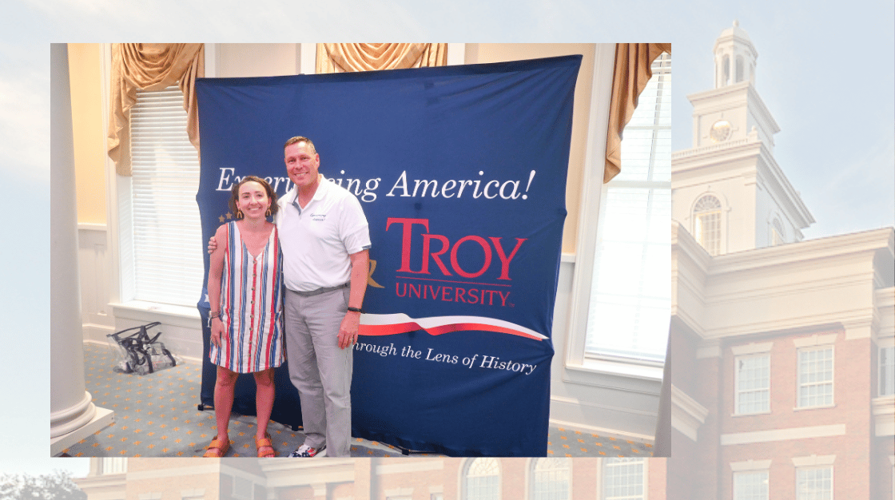
Through the Troy University and American Village partnership, the Experiencing America Initiative provided educators with a week of professional learning featuring expert-led presentations, collaborative application sessions and classroom resources designed to strengthen the civic foundation through the teaching of American history.
Throughout the week, teachers from across the region explored the history of America’s westward expansion through engaging presentations, interactive sessions and discussions led by historians, authors and education specialists. Sessions examined key historical events and figures while encouraging educators to consider multiple perspectives and discover practical resources they can incorporate into their classrooms to enhance student learning.
Featured presentations explored topics including the Lewis and Clark Expedition, the presidency of James K. Polk, the Indian Removal Act, the influence of Sarah Polk and the construction of the Transcontinental Railroad. Educators from around the country collaborated throughout the week by highlighting primary sources, inquiry-based learning and instructional resources designed to bring these historical topics to life for students.
In addition to academic sessions, participants experienced several of American Village’s signature programs, including the Independence Hall Experience, guided tours of the campus and collaborative discussions with fellow educators. These activities provided opportunities to connect historical content with immersive learning experiences and classroom instruction.
For Melanie Hendrix, a Troy University graduate and U.S. history teacher in Pensacola, Florida, the institute provided both professional growth and renewed inspiration.
“You’re surrounded by like-minded people who genuinely want to learn,” Hendrix said. “You’re in a room full of people who are trying to learn more so they can make their students more successful. It’s a wonderful place to be.”
The Teacher Institute concluded with a reflection and evaluation session, allowing participants to share ideas, exchange best practices and leave with new resources and strategies to support student engagement in American history classrooms.
This content is sourced from
Troy University Dothan Campus
. It reflects the author's views and has not been edited by our newsroom. It may have been generated using AI assistance.